The organization argues that the projects, which would add 36.000 places, are at the limit of capacity to avoid integrated environmental authorization and demands that their combined impact be analyzed.
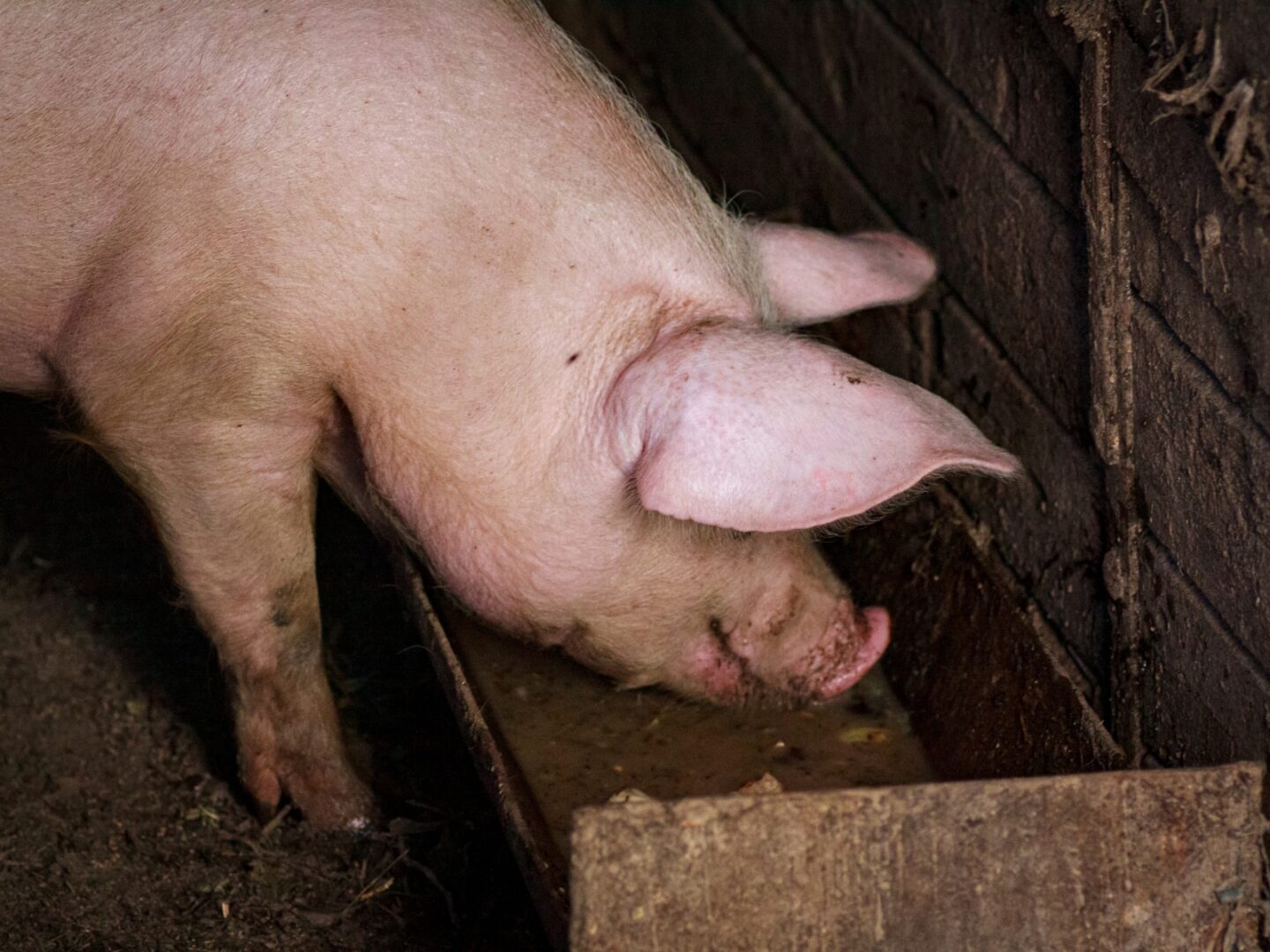
Stop Industrial Livestock Farming has questioned, through a statement published on its website , the processing of permits for two piglet farms in Fraga, whose environmental license applications were published in the Official Gazette of Aragon (BOA) on August 27. The organization maintains, among other things, that submitting them as separate applications allows them to avoid a more stringent environmental authorization process and calls on the Fraga City Council and the Government of Aragon to jointly assess their environmental impact.
With all the documentation on the table, the issue has its complexities. While Stop Industrial Livestock Farming requires a joint authorization, the announcements in the Official Gazette of Aragon (BOA) identify two applicant companies and two different locations : on the one hand, Desarrollos Ganaderos de Aragón II, SLU, is requesting a license for a farm with a capacity for 18.000 piglets weighing between 6 and 20 kilos on plot 29 of polygon 510, while the second application, as can be verified on the Government of Aragon's website, corresponds to Desarrollos Ganaderos de Aragón, SL, which is proposing a piglet transition farm on plots 114 and 115 of polygon 505.
What does seem clear is the capacity of both farms and their location: according to Stop Industrial Livestock, the two farms would have a capacity of 18.000 piglets each and would be separated by four kilometers.
The controversy over the 360 UGM
The biggest controversy seems to come with the number of livestock units (LGU) per facility: the BOA announcements include a capacity equivalent to 360, which is precisely what the organization's complaint focuses on.
They argue that Article 47 of the Aragonese Law on Environmental Prevention and Protection includes intensive livestock farms exceeding 360 Livestock Units (LU) within the integrated environmental authorization system . Each of these projects falls precisely within that range, leading Stop Industrial Livestock Farming to believe this is a deliberate attempt to circumvent the required procedure. Therefore, they demand that the combined 720 LU of both facilities be considered.
In fact, the law itself establishes, in Article 7, that dividing a project does not allow for circumventing environmental regulations and that the dimensions of its parts must be combined. However, the published announcements alone do not allow us to determine that these two operations constitute a single, divided project.
The Official Gazette of Aragon (BOA) confirms the processing of two applications for environmental licenses for classified activities, and it's important to remember that its publication does not imply the granting of the licenses, nor does it equate to a lack of environmental oversight . Furthermore, it's necessary to clarify that integrated environmental authorization and environmental impact assessment are distinct instruments.
Water, slurry and proximity to a protected area
Returning to the figures that the organization attributes to the projects, the two farms would jointly consume 41,6 million liters of water per year and generate 14.760 cubic meters of slurry, with an annual load of 42.840 kilos of nitrogen.
The entity also points out that the planned installation in polygon 510 would be 145 meters from the Special Protection Area for Birds (SPA) Valcuerna, Serreta Negra and Liberola, although this data is not included in the BOA.
Call for submissions
Although the environmental license applications mention two farms and two companies, Stop Industrial Livestock has no doubt that a joint application process should be managed , which is why they encourage all parties allegedly affected by the facilities to submit objections to both projects before the deadline of September 11.