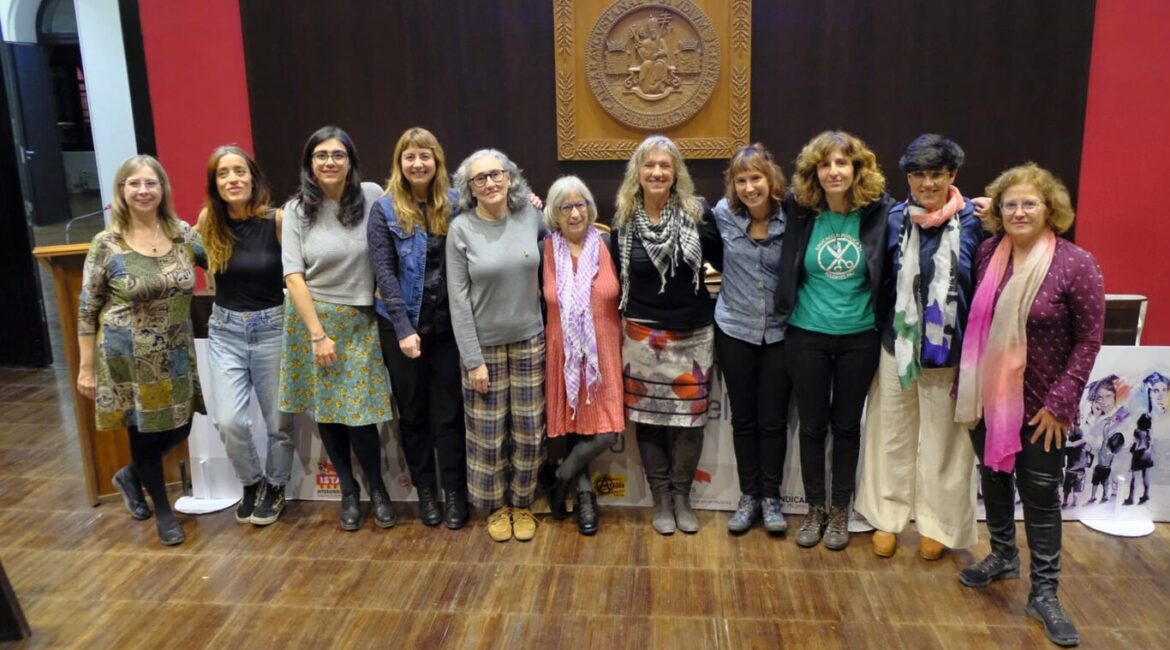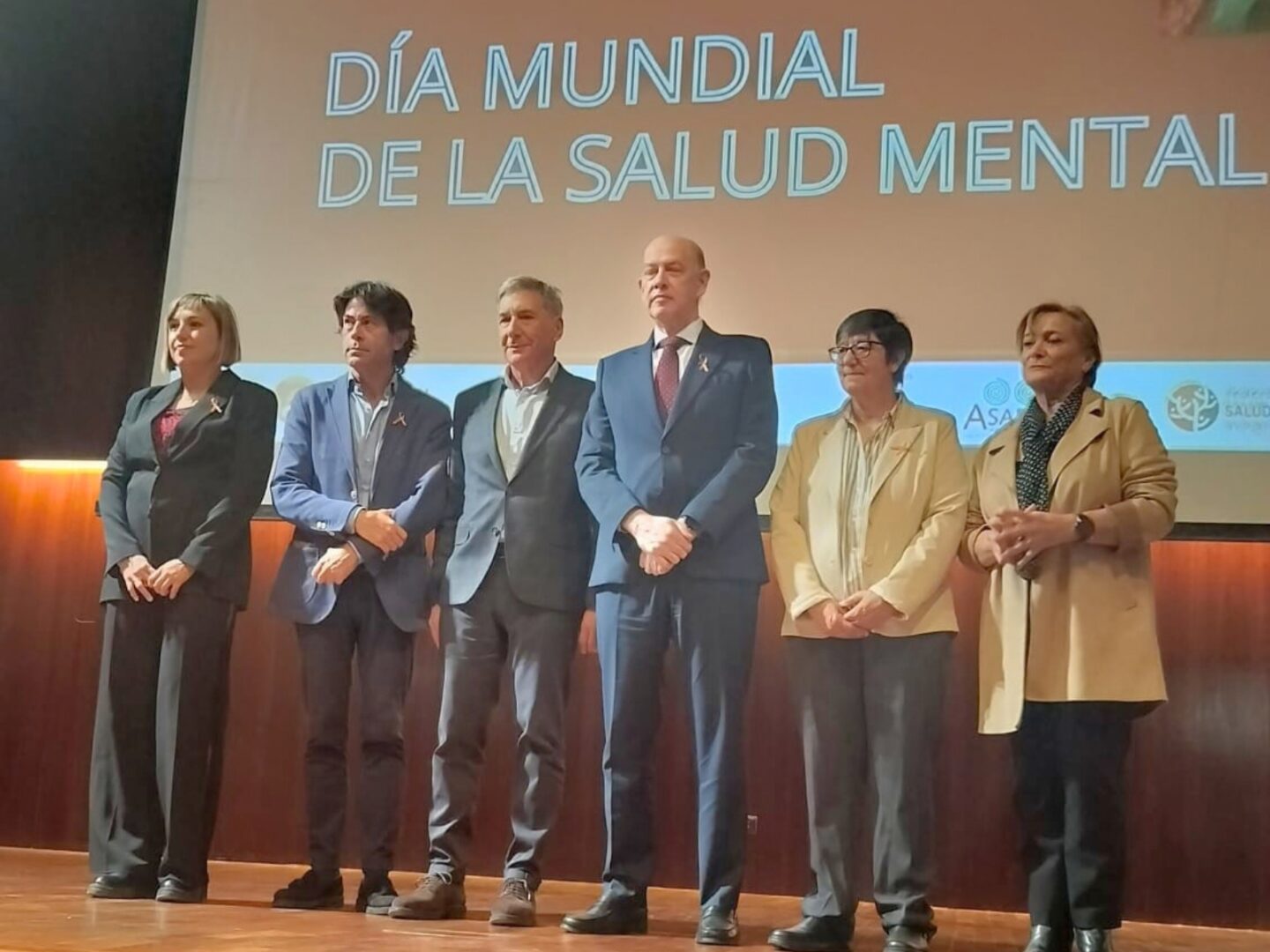
Within the framework of World Mental Health Day, Huesca hosted the conference “Match with your mental health”, focused on adolescence and youth, in which professionals from the educational and psycho-health fields analyzed the causes and consequences of the worsening data on mental health among children and adolescents
The Aragon Mental Health Federation, in collaboration with ASAPME Huesca, has organized today in the auditorium of the Huesca Provincial Council an event focused on the mental health of the child and youth population.
The meeting, under the slogan "Match with your mental health" , is organized on the occasion of World Mental Health Day and seeks to put on the public and political agenda the need to join forces and promote the emotional well-being of children and young people from the collective and community support.
During the meeting, a round table discussion was held, moderated by Eva Grasa, vice president of ASAPME Huesca, which brought together professionals with diverse specialization profiles who reflected on the challenges faced by adolescents and young people and the mental health situation of these age groups.
In her presentation, psychiatrist Laura Montes Reula shared her perspective from daily clinical practice. This allowed attendees to gain firsthand knowledge of the healthcare situation in the province and the main warning signs encountered in consultations.
Manuel Alcaraz Iborra, professor and PhD in Psychology at the University of Huesca, for his part, addressed the impact of the digital environment, analyzing the influence of algorithms, the constant search for social validation on networks and the meaning of this year's motto: "Match with your mental health".
From a perspective more focused on psychology in the educational field, Silvia Marco, director of the Specialized Regional Team for Educational Guidance in Mental and Behavioral Disorders, has championed literature as a therapeutic and well-being tool and the importance of preventive psychology in schools and families.
One of the key ideas that has emerged throughout the debate and generated consensus among participants is that mental health problems in young people are not solely due to individual causes. Behind the increase in these conditions often lie contextual factors such as precarious living conditions, uncertainty about the future, and the dynamics and relationships present in the digital and social media environment.
A snapshot of youth mental health in Spain: a social emergency.
The main statistics and reports on child and adolescent mental health published in recent years reflect a worrying situation, a social emergency.
One in seven young people aged 10 to 19 suffer from a mental health disorder, according to data from the World Health Organization (WHO), and 75% of them appear before the age of 18.
The emotional well-being of young people is directly affected by their material living conditions, which depend on the economic, social, and political context. The youth emancipation rate is at a historic low of 14,5%, according to the Emancipation Observatory of the Spanish Youth Council (CJE). Furthermore, young people who do leave home spend, on average, more than 80% of their salary on rent . This figure is as striking as it is worrying, since experts indicate that those who dedicate more than half of their income to housing double their risk of suffering from mental health problems.
In addition to socioeconomic factors, there is also violence in the school and digital environment . According to the ANAR Foundation and Mutua Madrileña, 12,3% of students in Spain suffer from bullying. Technological advances are also becoming tools used to perpetrate new types of violence and harassment, such as artificial intelligence, which is already used in 14,2% of cyberbullying cases to manipulate images or impersonate others. Twenty percent of cyberbullying victims experience suicidal thoughts, a figure that demonstrates the seriousness of these phenomena.
Studies warn that the onset of self-harming behaviors is occurring at increasingly younger ages , below 12 years old, and the National Institute of Statistics (INE) reports that in 2024, 344 deaths by suicide were recorded in the child and adolescent population in Spain.
Added to this reality is the gender dimension: young women experience twice as many symptoms of anxiety and depression as men of the same age; according to the FAD Youth Barometer on Youth and Mental Health, these adjustment disorders affect more than 50% of young women compared to 26% of men.
The lives of minors in the digital environment are marked by early hypersexualization , unrealistic aesthetic pressure, and exposure to specific forms of sexist violence on social media.
Phenomena such as cyberbullying, the non-consensual dissemination of intimate images, digital control in relationships, and the use of AI tools to generate pornographic content or manipulate photographs, such as deepfakes and fake nudes, constitute systematic attacks on the privacy and integrity of adolescents and young women.
In this context, the Aragon Mental Health Federation and ASAPME Huesca join the demands of the associative movement to call for the implementation of emotional education in schools, a strengthening of primary and specialized care through a community-based and inclusive model, and an increase in public resources to address the mental health of young people. These measures and policies should enable them to develop a dignified and healthy future.