sponsored by Fincas Continente
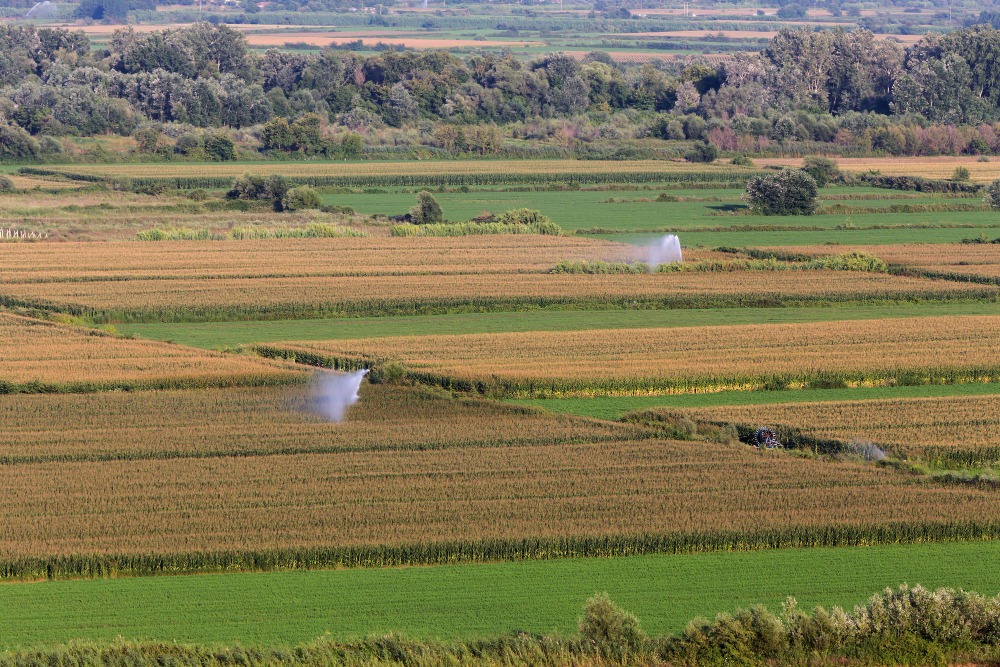
Recent transactions and valuations in the Bajo/Baix Cinca region show that the value of a hectare can vary considerably depending on irrigation, crop, location, and productive potential.
Aragon closed 2025 with an agricultural income of €2.855 billion, and Huesca accounts for almost half of the region's total agricultural output. As Fincas Continente , in the Bajo/Baix Cinca area, has been analyzing in recent months, new irrigation developments and recent sales and appraisals show that the value of a farm depends on much more than just the number of hectares.
Every September 9th, World Agriculture Day is celebrated , a day that highlights the work of those who cultivate the land and the economic and social importance of the sector.
In Aragon, this year's anniversary coincides with data reflecting the importance of agricultural activity. The Government of Aragon has just published its preliminary 2025 macroeconomic indicators, which show that agricultural income reached €2.855,36 million , a 10,89% increase compared to 2024. Final agricultural output reached €6.786,76 million, representing an 8,62% growth. Data from the Government of Aragon on the 2025 agricultural macroeconomic indicators
Within Aragon, Huesca remains the leading agricultural province , according to experts at Fincas Continente , with a Final Agricultural Production of €3.359,1 million in 2025, representing 49,5% of the regional total. It also accounts for 48,13% of Aragon's agricultural income. See the key agricultural indicators for Aragon .
In this context, a particularly relevant question arises for a territory like Bajo Cinca: what is the real value of an agricultural property?

There is no single price per hectare
The first answer is simple: not all hectares have the same value.
The latest official data available on agricultural land purchase and sale prices corresponds to 2024. According to the Ministry of Agriculture, Fisheries and Food , the average price of agricultural land in Aragon was €5.175 per hectare that year , compared to €5.006 in 2023, an increase of 3,38%. Nationally, the average reached €10.248 per hectare.
It is important to note that there is no official purchase price for 2026 yet . Therefore, the most recent references must combine the latest available statistical data with specific transactions and valuations carried out during this year.
The Ministry's own statistics allow for a breakdown of values according to land use. In Aragon, some land types have values significantly higher than the overall average. For example, land used for dryland fleshy fruit orchards reached €3.344/ha in 2024, while irrigated nut orchards reached €10.538/ha. Consult the MAPA land price results.
These are regional averages and cannot be directly applied to a specific farm in the Bajo Cinca region, but they help to understand a fundamental issue: cultivation, water, and productive capacity substantially modify the value of a hectare.


Fraga offers a real market reference in 2026
In the Bajo Cinca region, we already find concrete operations that allow us to get much closer to the reality of the market.
This year, the Fraga City Council published a public auction for 18 municipal rural properties , located primarily in the irrigated area of the Cardiel Siphon. The properties totaled approximately 136 hectares and had a total appraised value of €1.247.762 , representing an average value of around €10.675 per hectare.
The transaction was analyzed by Fincas Continente , which focused on the specific characteristics of the land and the factors that must be considered to correctly interpret its valuation. Fincas Continente's analysis of the Cardiel Siphon tender
Therefore, that figure of 10.675 euros per hectare cannot be interpreted as the market price for all agricultural land in Fraga . It is the average valuation of a specific group of properties under certain conditions.
But it does offer a particularly interesting 2026 reference point for understanding the value that certain agricultural lands in the area can reach.
Irrigation can completely change the equation
In the Lower Cinca region there is also a factor that may have increasing importance in the valuation of certain properties: the transformation and modernization of irrigation.
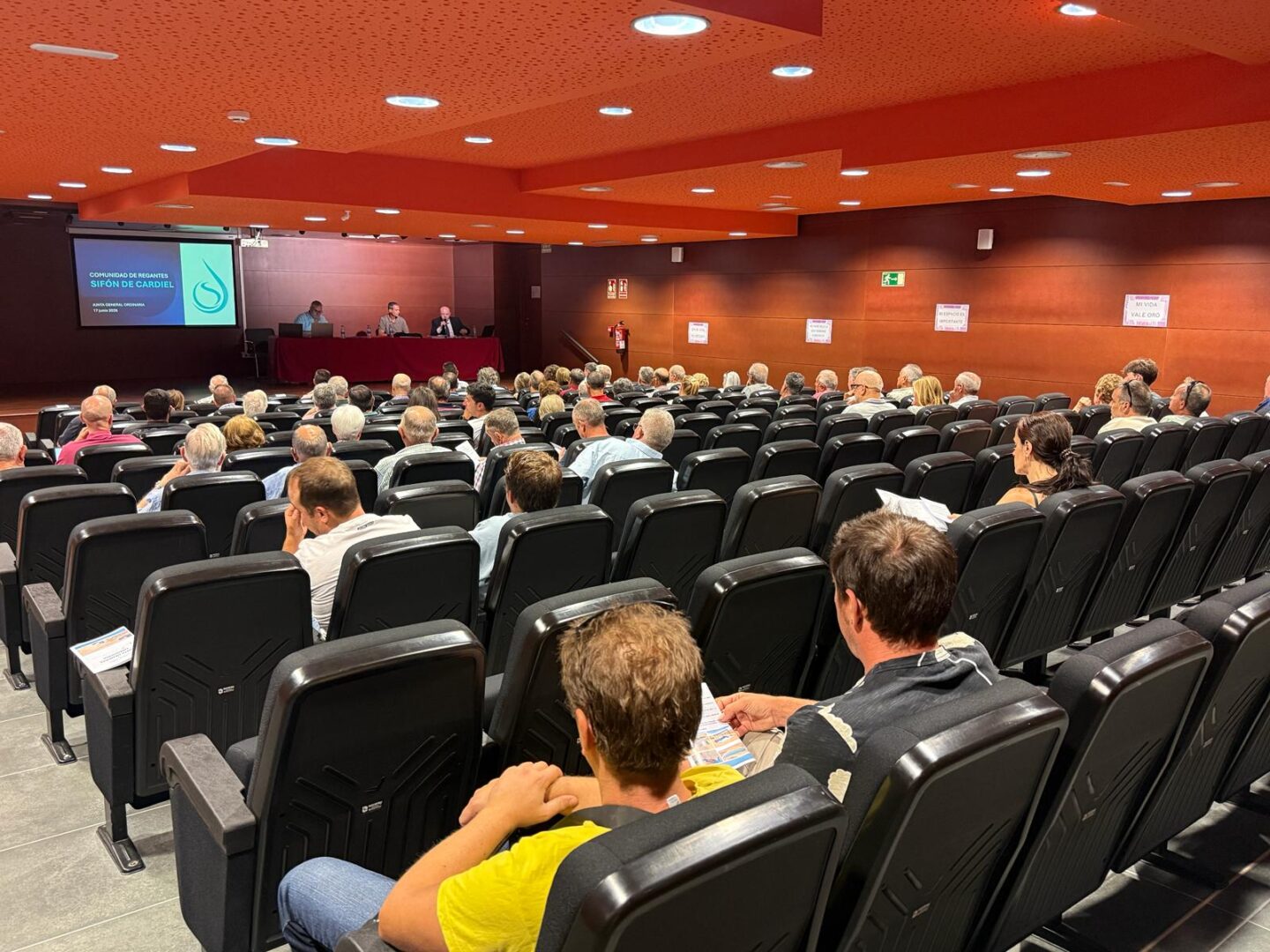
The most obvious example is the Cardiel Siphon , an action that affects the municipal areas of Fraga and Ballobar and which contemplates the transformation into irrigated land of more than 5.300 hectares , with an investment of around 50 million euros.
The project encompasses approximately 4.480 hectares in Fraga and 853 in Ballobar. Information from the Government of Aragon regarding the Cardiel Siphon
This type of action is especially relevant for the land market because the effective availability of water and the characteristics of the irrigation system are part of the elements that determine the productive potential of a farm.
The Lower Cinca region also benefits from other modernization projects. In Zaidín, Fraga, and Osso de Cinca, the Government of Aragon has completed the comprehensive modernization of 1.389 hectares , transitioning from surface irrigation to a pressurized irrigation system. Completed irrigation modernization projects in Aragon

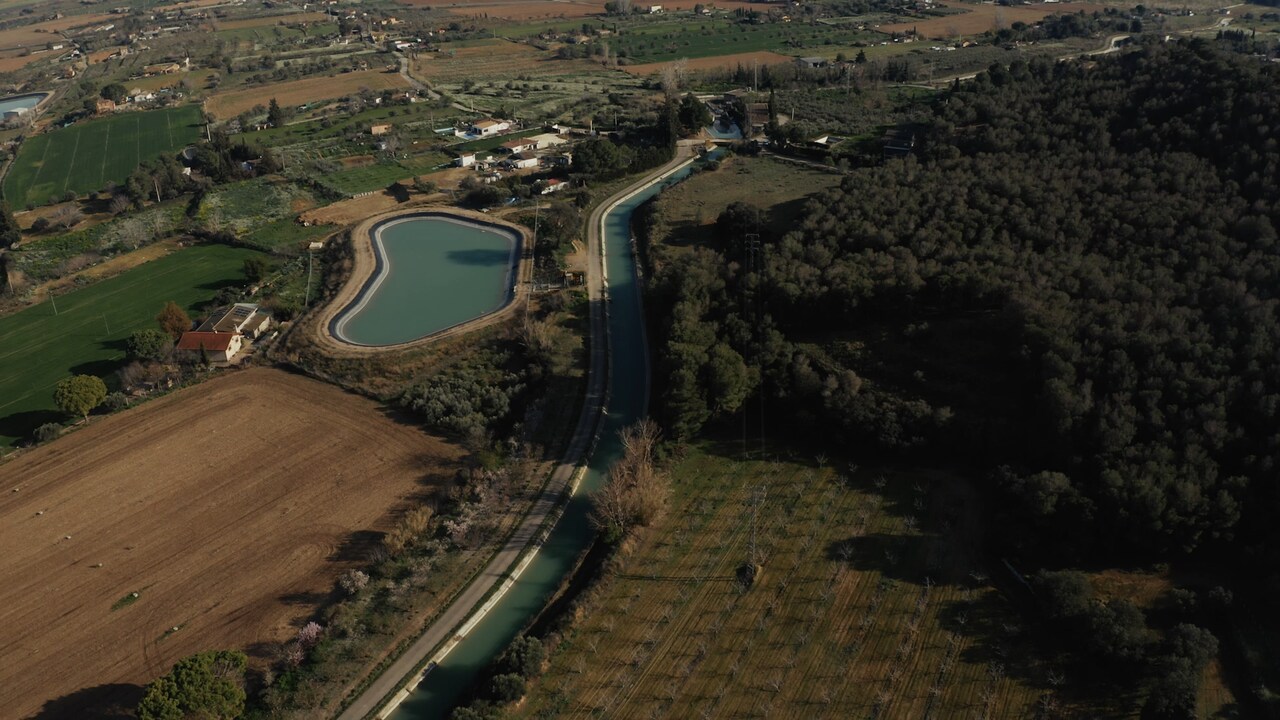
A hectare of dryland is not the same as a hectare of irrigated land.
The difference is not limited to the available water.
An agricultural estate can incorporate factors such as the type of crop, the age and condition of a plantation, historical productivity, access to roads, the configuration of the plots, existing facilities, soil quality, legal status, transformation costs, or the possibilities of developing a particular crop.
Therefore, two properties located in the same municipality can have very different values.
Fincas Continente emphasizes the importance of analyzing each transaction individually and not simply applying a generic price per hectare. In their analysis of the Cardiel Siphon tender, they already highlighted the differences between the lots based on their size, location, and suitability for cultivation. Fincas Continente's analysis of the Cardiel Siphon transaction
Ballobar also shows the differences between farms
Current events offer another very recent example.
The Official State Gazette (BOE) published on September 9, 2026 , coinciding with Agriculture Day, a public auction of several rural properties located in Ballobar. See the Ballobar rural property auction published in the BOE.
One of them, corresponding to plot 144 of polygon 505, has a cadastral area of 43.574 m² and has a starting bid of 10.682,46 euros in the third auction.
Another property in the same area has a cadastral surface area of 22.731 m², although its registered surface area is 10.282 m² and, in addition, is subject to specific conditions derived from its inclusion in Monegros II.
This second case is particularly illustrative: the cadastral area, the registered area, the location of the property, the encumbrances and its relationship with the irrigation system are elements that must be analyzed before establishing a comparison of prices per hectare.
It would therefore be incorrect to interpret these auctions as a supposed "valuation" of agricultural land in Ballobar. They are, however, real and current benchmarks that allow us to observe how specific properties are valued.



And how much can a farm in the Bajo Cinca region be worth?
The answer, according to available data and the experience of specialized professionals, lies in abandoning the idea of a single price per hectare.
Official statistics reveal trends and averages; real-world transactions provide concrete values; and professional knowledge allows for the interpretation of the specific characteristics of each property.
In the case of the Lower Cinca region, the development of irrigation adds another element that could modify the potential of certain lands. The Government of Aragon considers irrigation a fundamental tool for increasing and stabilizing agricultural production and promoting agro-industrial activity and services linked to the sector. Information on the Cardiel Siphon project
Therefore, based on Fincas Continente's experience, a professional valuation should analyze the property as a whole and not simply apply a fixed amount per hectare . Available water, current or potential crops, productivity, location, access, facilities, and administrative status can all make significant differences.
A sector that is gaining economic weight
The economic context also explains the interest that agricultural land arouses.
Aragon ended 2025 with agricultural income 10,89% higher than the previous year and agricultural production valued at €1.985,89 million , a 10,37% increase. Cereal production reached 3,98 million tons, 31,8% more than in 2024, while its value increased by 23,3%. Key agricultural indicators for Aragon 2025
Huesca accounts for almost half of the Final Agricultural Production of Aragon, while the Bajo Cinca is one of the most important agricultural territories in the east of the province.
According to data from the Aragonese Institute of Statistics, the Bajo Cinca region has 71.606 hectares of cultivated land , within a total area of 141.125 hectares. Basic data for Aragon — Aragonese Institute of Statistics
The region combines a significant presence of irrigated crops, especially fruit trees, with areas of cereals and other crops, creating a very diverse agricultural territory.
The value of land goes beyond the price
World Agriculture Day thus allows us to look at the countryside from a different perspective. Land is not only a productive resource: it also represents an asset whose value is conditioned by the actual possibilities for its exploitation.
In a territory like Bajo Cinca, where consolidated fruit farming, important irrigation infrastructures and new areas under transformation coexist, knowing the real value of a farm requires analyzing much more than its surface area.
For a landowner considering selling, an accurate valuation can help them properly position their property in the market. For a buyer, understanding the productive, legal, and economic characteristics of a farm is equally crucial.
And that's where specialized knowledge of the rural property market becomes important: it's not simply about knowing how much a hectare costs, but about understanding what makes a hectare have a certain value.
In 2026, with the Aragonese agricultural sector growing again and with important irrigation transformation and modernization projects underway in the Bajo Cinca region, that question becomes even more relevant.
Methodological note: Artificial intelligence tools were used to support the research, verification, and processing of information in the preparation of this article and the analysis of the data. The data and sources cited were verified before publication.